The United States Citizenship & Immigration Service (USCIS) makes 50,000 visas available every year through a program called the Diversity Visa Lottery Program. The program offers a path to lawful permanent resident status by obtaining a green card, and applicants are selected by a randomized computer drawing.
The Diversity Visa Lottery Program is only available to applicants from countries that have low rates of immigration to the United States, which is defined as less than 50,000 immigrants in the previous 5 years. Applicants must have a high school diploma or 2 years of skilled work experience, and can apply without needing an employer or family-member sponsor. The U.S. Department of Labor publishes a list of eligible occupations and the State Department publishes a list of eligible countries.
Non-US residents seeking to apply for lawful permanent residence can apply, regardless if they are in the United States or abroad. The deadline for the application is November 8th. Selections are made through a randomized computer drawing, but a single country cannot have more than 7% of applicants selected.
You can learn more about the program by clicking the button below, or giving our office call at (925) 520-5195.
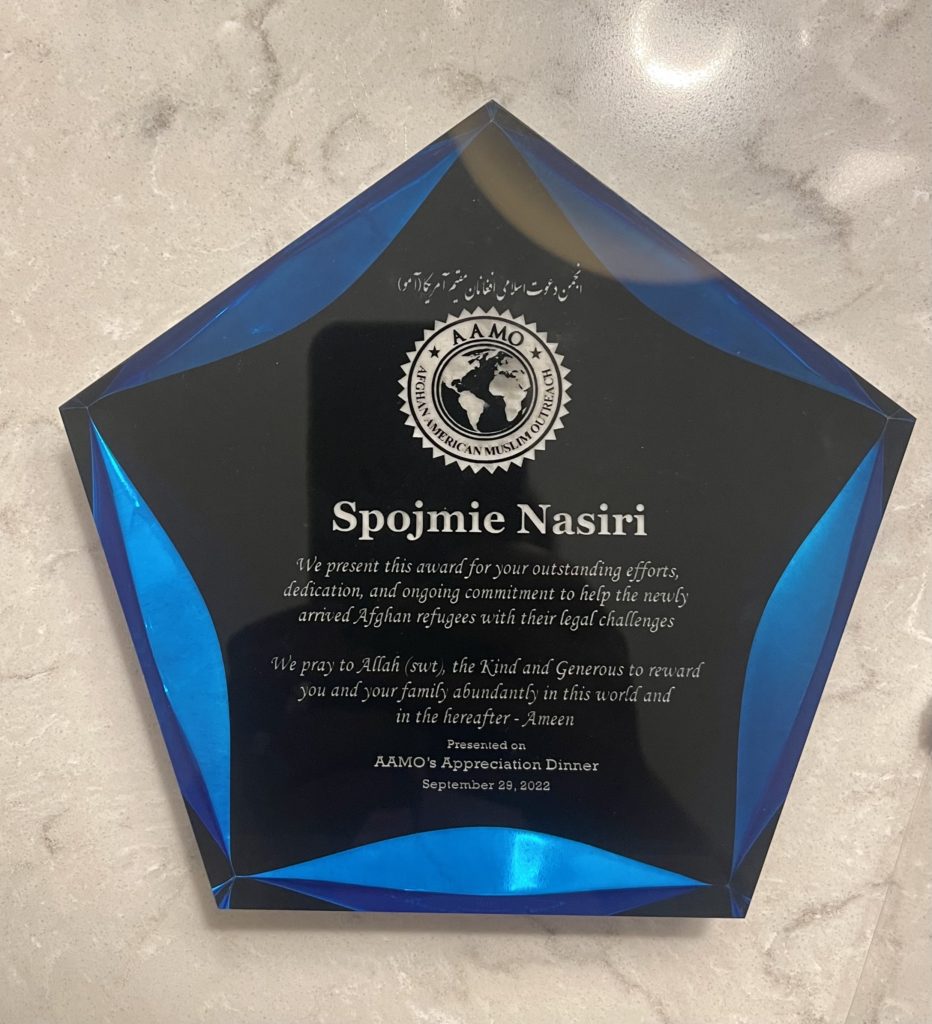
Earlier this month, San Francisco immigration attorney Spojmie Nasiri was recognized by the Afghan American Muslim Outreach (AAMO). Attorney Nasiri received an award for her outstanding efforts, dedication, and ongoing commitment to help Afghan refugees with their legal challenges.
Afghan American Muslim Outreach (AAMO) is a non-profit organization that exists to serve the Afghan community in the United States. Through social activism, educational seminars, scholarships, and publications, AAMO seeks to foster an Afghan-American Muslim identity and to empower future generations to serve their communities with tools, education, and skills.
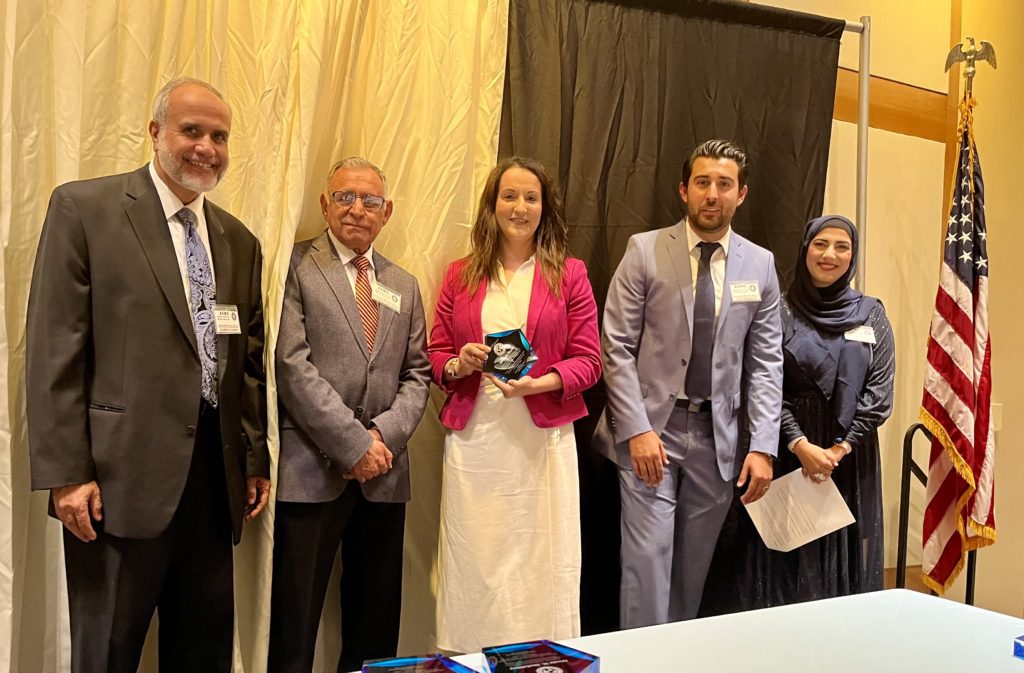
Said Spojmie Nasiri about receiving the award:
I am extremely honored to receive this recognition from within my beloved Afghan community, the Afghan American Muslim Outreach. (AAMO) Sincere gratitude for the recognition and AAMO’s dedication in serving the needs of our newly arrived Afghans.
Over the course of the last year, so many people all across the United States have come out in support of the Afghan refugees. The urge to help has been constant as thousands of people from all backgrounds and faiths have organized fundraisers, offered their homes, furnished apartments, provided cooked meals and started political advocacy campaigns and built coalitions with other organizations to support the newly arrived Afghan refugees. This collective effort would not have been possible without the dedication of so many individuals. Indeed, this award belongs to each and every one of you who have provided endless support to our newly arrived Afghan brothers and sisters.
The United States Citizenship & Immigration Services (USCIS) requires biometric information as part of certain immigration applications. While the word "biometric" might sound complicated or scary, it just means a biological characteristic that can be captured, digitized, and added to a database. Biometrics are used by USCIS to verify the identification of applicants and to compare against the FBI database to check for criminal records.
If your USCIS application requires biometrics, you will receive a notice providing you of the date, time, and location of the appointment. It is very important to attend your appointment, or attempt to reschedule, because without the biometric information, your immigration application could be considered abandoned and thus be denied.
What USCIS applications require biometrics?
Not all applications with USCIS require biometrics – it depends on the type of application that you have filed. Biometrics are an application requirement for such things as green cards, adjustment of status (I-485), employment authorization (I-765), advance parole travel (I-131), extensions (I-539), and temporary protected status (I-821).
What biometrics are collected for USCIS applications?
There are three types of biometric processing that you could undergo, as part of your USCIS application. The highest tier requires a photo of you, a scan of all of your fingerprints, and a recording of your digital signature. Your notice will have an "ASC" code indicating what level of biometric processing is required.

Immigration attorney Spojmie Nasiri recently participated on a panel about the topic of Finding Home: Untold Stories of the Muslim Diaspora
In conjunction with the Council on American-Islamic Relations (CAIR) California and Faith in Action East Bay, the panel spoke about the challenges that Muslim people have experienced and continue to experience as they are fleeing crises and conflicts around the globe. The speakers explored why these stories are overshadowed by other conflicts such as the war in Ukraine, by discussing immigration laws in the United States and bringing to light real stories of resettlement in this country.
Spojmie brought a unique perspective to the conversation, as a refugee herself who came to the United States at a young age. Since the fall of Afghanistan into Taliban control, attorney Nasiri has played an instrumental role in helping thousands of Afghan families to evacuate the country and ultimately resettle in the United States.
You can watch the full presentation by clicking the "Watch Presentation" button below: