Lawful permanent residents receive a permanent resident card, most commonly known as a green card, to prove their immigration status. Once issued, a green card expires after 10 years, upon which time the resident must either renew their green card or apply for citizenship. To remain a lawful permanent resident in the United States, residents must have a valid and unexpired green card in their possession. Lawful permanent residents can file to renew if their green card is expired or will expire within the next 6 months.
Form I-90 is the USCIS form for applying to renew a green card. Form I-90 can also be used for those who need to replace their green card, in situations where the card is lost, stolen, or damaged. In certain situations, lawful permanent residents will need to update their biometric information on their green cards, due to a legal name change or gender change. This can also be accomplished by filing Form I-90.
On our website, we have published more information about Form I-90, such as the process for applying to renew or replace a green card, the required documents, the eligibility requirements, and automatic extensions.
To find out more information about Form I-90 on our website, click the "Read More" button below.
We are excited to announce that immigration attorney Spojmie Nasiri has been selected to the 2023 National Board of Directors for the Council on American-Islamic Relations, or CAIR. A passionate advocate for the rights of immigrants, Spojmie joins the organization's eight-member National Board of Directors to help further the important mission of CAIR.

CAIR is a prominent and influential organization that serves as the largest Muslim civil liberties organization in the United States. With chapter affiliates nationwide, CAIR has pursued its mission of promoting a positive image of Islam and Muslims in America through media relations, lobbying, education, and advocacy. Since its establishment in 1994, CAIR has empowered American Muslims to be more widely represented and to engage in political and social activism.
Spojmie joins the CAIR National Board of Directors as a way to extend her advocacy for immigrant rights and to combat religious discrimination, defamation, and hate crimes. She has previously served as the president of the Board of Directors for the San Francisco Chapter of CAIR, from 2015 - 2018.
Diversity, compassion, and inclusion are bedrock values at the Law Office of Spojmie Nasiri, PC - which is minority-owned, women-owned, and employs a diverse staff from a variety of cultural backgrounds. We are so very proud to have Spojmie advocating on a national level for these important values that impact not just Muslim-Americans, but all Americans.
Learn more about CAIR and Spojmie's involvement on the National Board of Directors by clicking the button below.
Last month, the Department of Homeland Security (DHS) announced that Temporary Protected Status, or TPS, would be redesignated and extended for the country of Haiti. This announcement allows for refugees from Haiti to retain their protected status, so long as they remain eligible.
With several crises happening around the world — from the Taliban takeover of Afghanistan, to the Russian invasion of Ukraine, to political violence in Central and South America — the number of countries designated for TPS has increased.
It is important to understand what Temporary Protected Status is — and perhaps more importantly, what it isn't. TPS is a temporary immigration protection that allows nationals from other countries to remain in the United States, instead of returning to unsafe conditions in their home countries as a result of armed conflict, natural disaster, or other extraordinary conditions. To be eligible for TPS, applicants must have maintained a continuous presence in the United States. Once granted TPS, applicants may live and work in the United States for a limited amount of time from 6 - 18 months, unless extended by DHS.
To learn more about Temporary Protected Status, we've partnered with the American Immigration Lawyers Association (AILA) on an informational brochure.
You can access the TPS informational brochure by clicking the button below.
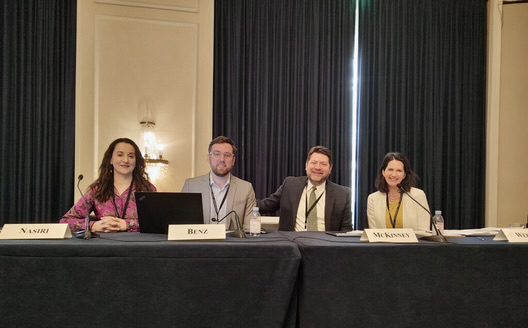
Last month, immigration attorney Spojmie Nasiri presented at the 2023 AILA Midwinter Conference in San Juan, Puerto Rico.
She spoke on a panel along with fellow immigration practitioners Kathryn Weber, Jeremy McKinney, and Frederick Benz.
Spojmie's presentation was about Asylum Hot Topics and the pathways to permanent legal status that are available to Afghan and Ukrainian nationals. The panel discussed recent executive orders and appeals court decisions related to asylum, as well as best practices for migrant protection protocols and family reunification.
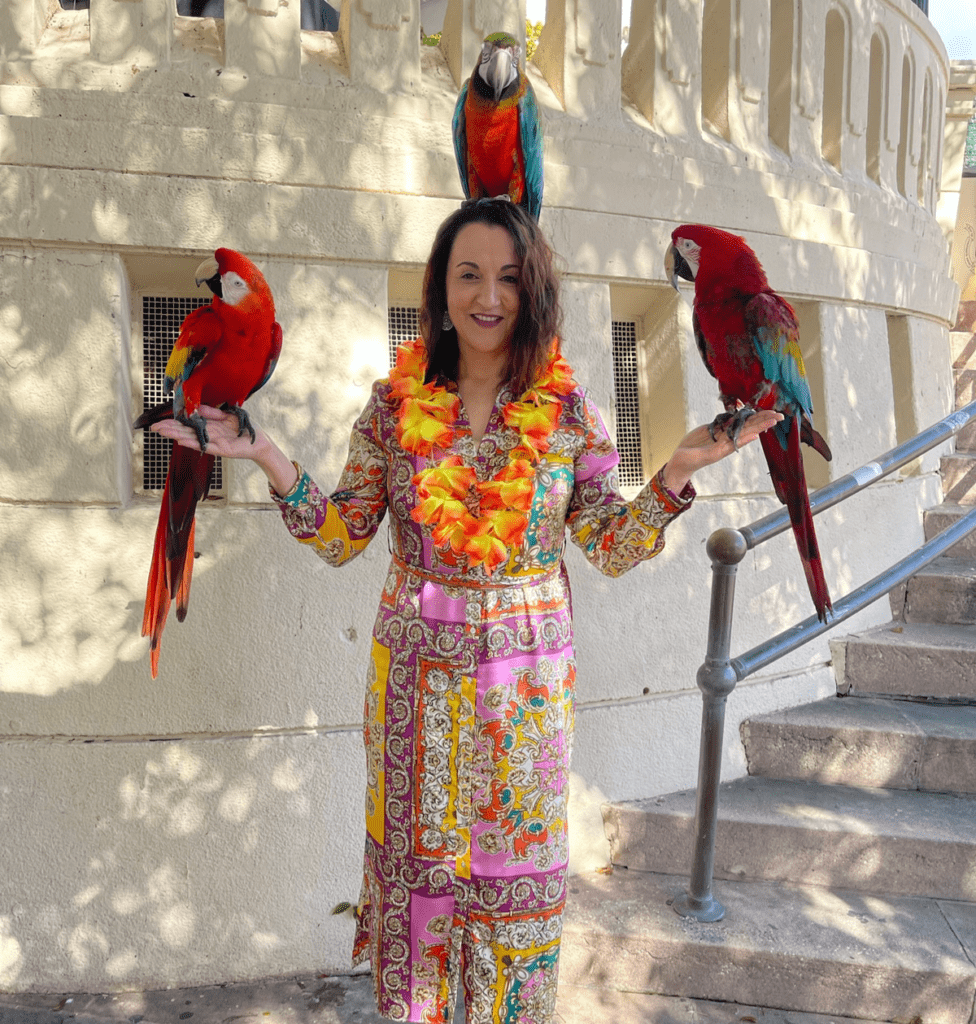
While in Puerto Rico to speak at the conference, Spojmie also got to experience the rich culture of the island — including this fun photo opportunity with the famous parrots of Old San Juan!
Spojmie Nasiri was selected to join the 2023 Alameda County Bar Association Board of Directors. As an immigration lawyer and owner of the Law Office of Spojmie Nasiri, PC, Spojmie will contribute to the ACBA's pursuit of its mission to promote diversity and civil rights in the Alameda County legal community.
The Alameda County Bar Association is the professional membership association for lawyers and legal professionals living and working in Alameda County. Through networking, educational workshops, and robust committees, the ACBA promotes the legal profession and provides attorneys the tools they need to develop their practice. ACBA also improves access to justice for residents of Alameda County through the ACBA lawyer referral service and pro bono legal services through a program called Legal Access Alameda.
Spojmie is honored to be selected to the ACBA Board of Directors, and looks forward to working with her colleagues to improve access to justice and promote diversity within the justice system in California.
Recently, USCIS announced that the filing fee for applying for DACA, Form I-765, must be paid separately from the biometric service fee. Previously, applicants were able to pay the $410 filing fee and the $85 biometric fee in one single payment of $495.
However, because USCIS is transitioning to a new system, those applying for DACA must submit two separate payments. The two fees can both be paid online, but must be paid in separate transactions.
If you are planning for file for DACA protection, be sure to make two, separate payments for the filing fee and biometric service fee. If you submit a combined payment for the two fees, USCIS could reject the application package altogether.