Welcome to this month's issue of the Nasiri Law Immigration Newsletter! This month, we provide updates to the re-parole process for Afghan refugees, discuss advance parole through DACA, and highlight recent national recognitions. You can read all about it in this month's immigration law newsletter.
Last week, immigration attorney Spojmie Nasiri was honored to be a keynote speaker at the 8th Annual Afghan-American Community Organization (AACO) Afghan-American Conference.
The national three-day conference took place in Washington D.C, providing a forum for Afghan-American community leaders to engage in meaningful dialogue, grow professionally, and build relationships.
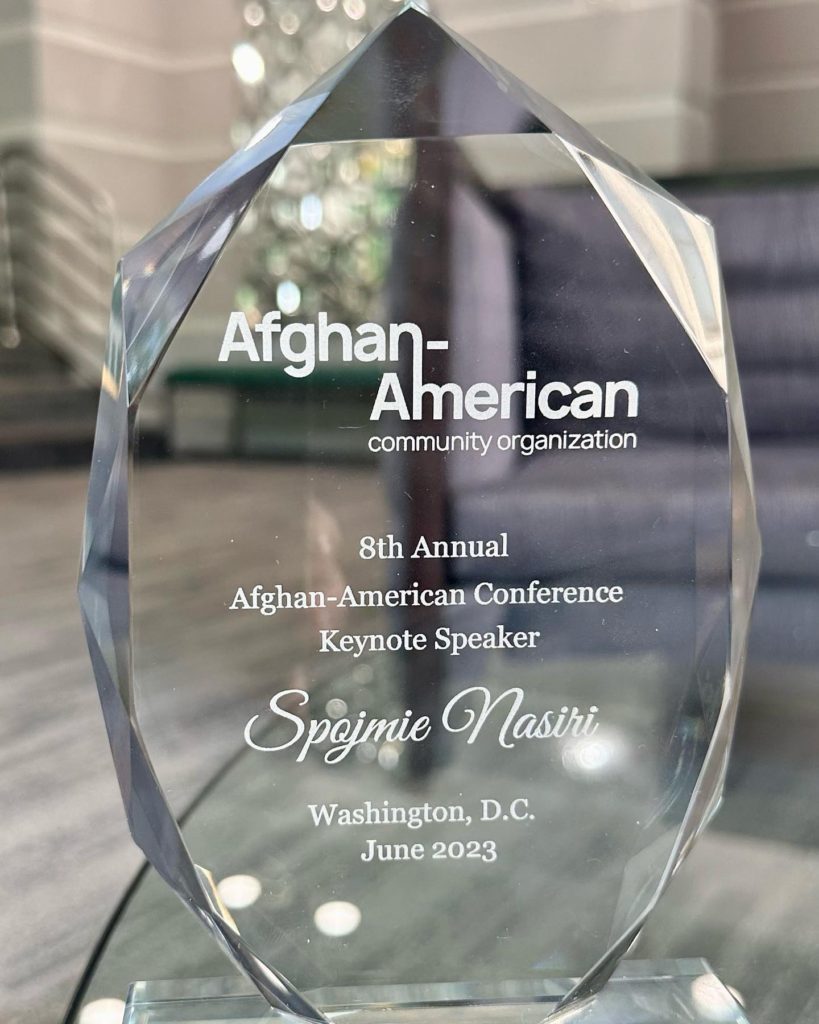
The theme of the conference was "Connecting with Our Roots", which helped serve as a timely reminder of the rich history and cultural heritage that Afghan-Americans share.
Spojmie is proud to be a national board member for AACO, and is passionate about advancing the organization's mission of promoting civic and social engagement within the Afghan-American community through education and outreach.
Spojmie Nasiri had the following to say about the conference, and her keynote presentation:
Thank you to the AACO Family for your endless dedication in organizing the conference!
As we continue to connect with our roots and empower one another, I am deeply grateful for this platform to discuss and address pertinent issues impacting our community. Surrounded by such an impressive group of talented, educated Afghans, I was left in awe by everyone involved, who demonstrated a steadfast dedication to serving and empowering the Afghan American community. Their enthusiasm, their resilience, their unwavering desire to make a difference—it was truly inspiring. I felt a profound sense of pride, a shared commitment to celebrate our heritage and contribute positively to our communities.
I leave the conference with the feeling now more than ever, that the future of our Afghan community is not only promising but also brightly lit. The spirit of unity, perseverance, and ambition I witnessed during this conference gives me immense hope. It was an experience that I will carry with me always, and I am already looking forward to the next conference!
For the thousands of Afghan refugees who fled Afghanistan after the Taliban takeover, many received humanitarian parole in order to remain in the United States.
However, with the two-year anniversary of the Taliban takeover coming up later this year, many parolees are facing an expiration of their status.
As a result, the Department of Homeland Security recently launched a new process, whereby qualified Afghan parolees can receive a two-year renewal of their parole at no cost. This renewal allows them to continue living and working in the United States, providing additional time for those interested in applying for a permanent resident status.
This new re-parole process only applies to certain Afghan parolees, and will be considered on a case-by-case basis. After announcing the new process, the US Citizenship and Immigration Service (USCIS) released more details about the process, including eligibility requirements, timeline, and frequently asked questions.
You can learn more about the special process, and review answers to frequently asked questions, by clicking the button below.
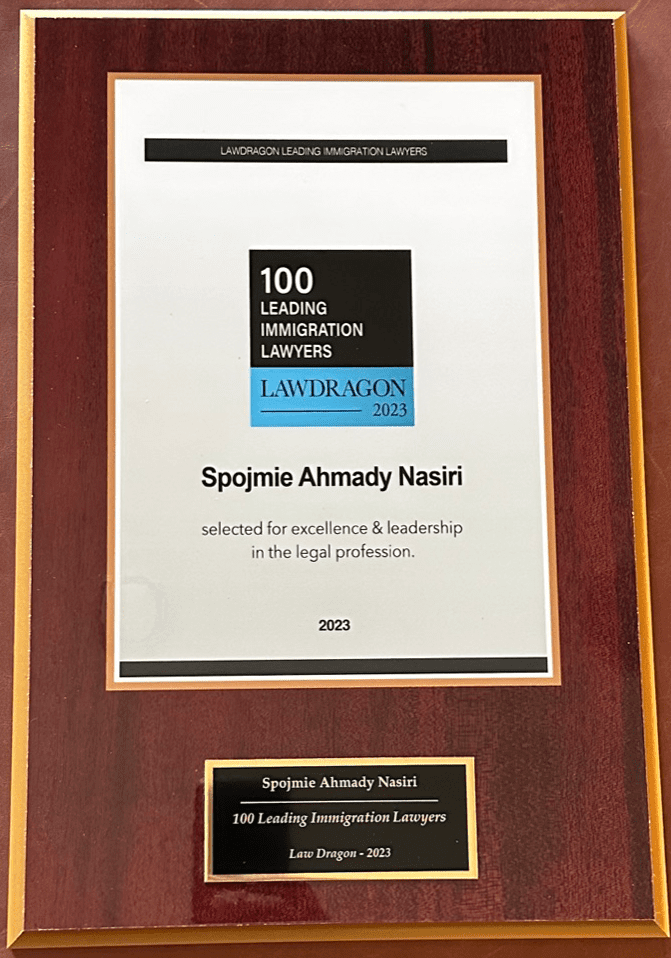
Attorney Spojmie Nasiri was recognized as a Top 100 Immigration Lawyer by Lawdragon in 2023.
2023 is the first year that Lawdragon has published a guide of immigration lawyers, and we're proud that Spojmie is included in the inaugural list!
Lawdragon is a national media company that publishes editorials, magazines, and guides about the legal industry.
If you are a DACA recipient and need to travel outside the United States for a temporary period of time, you may be eligible to apply for advance parole, which allows you to leave the country and return without losing your DACA status.
If you are granted advance parole through DACA and return to the United States before your DACA status expires, you may also be able to apply for adjustment of status. This could result in you becoming a permanent resident through a family-based or employment-based green card petition.
To be eligible for advance parole through DACA, your DACA status must be in good standing, you must have a valid reason for traveling outside the United States, you must complete Form I-131 and submit appropriate documentation, and you must receive approval before leaving the country.
To learn more about advance parole through DACA, and how you may be able to file for adjustment of status upon re-entry, click the "Learn More" button below.